Fishing Games – How Fish Shooting Games Really Work
Bullets are bets, bosses are jackpots, and the arcade is friendlier once you know the maths.
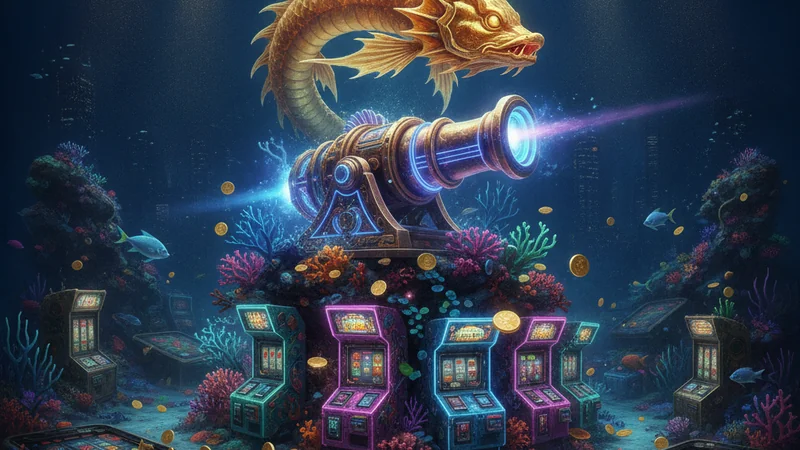
Fishing games are the arcade corner of the live casino lobby, neon reefs, cannon turrets and shoals of fish drifting across the screen with multipliers on their backs. They look like pure video games, and that is the first thing to understand properly, because underneath the arcade skin sits ordinary casino mathematics. Anyone who has watched the reef from the edge of the lobby wondering what it actually costs to fire a shot will find the answer here, and be able to price a session properly, read a fishing title's info panel, tell a genuine feature from a stake increase in costume, and pick a bullet value that lasts an evening instead of ten minutes.
Everything here describes how the format works across the Malaysian market rather than at any one site, because fishing titles are supplied by the same handful of Asian studios to every lobby that carries them. Each game's own info panel is the authority on its paytable and published return, and where figures vary between titles we give the range rather than a number that will not hold, the same discipline our review methodology sets out for every page on the site.
Every Bullet Is a Bet
The core mechanic is simple once named. Each shot fired costs credits at your selected bullet value, and each fish carries a multiplier paid when your shot brings it down. Small fish fall easily and pay small multiples, armoured and boss fish absorb long streams of fire and pay the figures on the posters. Whether a given hit kills is decided by the game's certified random engine, weighted so that across all players and all sessions the reef returns its published rate. Aim gives the game its feel, but the economics are bullet cost against kill probability, which is a bet like any other.
The Cannon Menu, Honestly Priced
Raising your bullet value or upgrading cannons raises the stakes, not the value. Bigger bullets kill faster because they are staking more per shot, and the proportions are tuned so that no cannon secretly beats the reef. The same is true of auto-aim and target-lock features, conveniences that spend your bullets tidily rather than edges. Choose the bullet size the way you choose a table minimum, from your budget, and treat every upgrade prompt as a stake decision wearing a costume.
Bosses, Bombs and the Volatility Dial
The special targets are the format's jackpot layer. Boss fish, dragon kings and their cousins pay multipliers in the hundreds, chain-lightning and bomb fish clear sections of screen with group payouts, and events parade rare targets across the reef on a schedule. Chasing them is the high-variance style, long expensive streams of fire redeemed occasionally by a screen-filling payout. Farming small fish is the low-variance style, steady dribbles of return that stretch a session. Both are legitimate, both face the same overall return rate, and most players drift between them by mood, which is exactly what the designers intend.
What a Session Actually Costs
This is the part the arcade skin hides, so it is worth doing the arithmetic in ringgit. Bullet values across the Malaysian fishing lobbies typically start around RM0.01 and run up past RM10 a shot depending on the room, and auto-fire in most titles releases several shots a second. Take a modest RM0.10 bullet and a firing rate of five shots a second. That is RM0.50 a second, RM30 a minute, RM1,800 an hour of turnover, from a player who feels like they are playing an arcade game rather than staking anything at all.
Now put a published return against it. Fishing titles commonly quote a return to player somewhere in the low-to-mid nineties, and the game's info panel states the figure for the title you are in. At a 95% return, that RM1,800 of hourly turnover carries an expected cost of about RM90 an hour. That is a perfectly reasonable evening's entertainment if you decided on it, and a genuine shock if you did not. The number to fix before you start is not a balance but a bullet value, because bullet value times firing rate is the only thing that sets the pace.
Work it backwards instead. If RM50 is the evening's budget and you want it to last an hour, you need turnover near RM1,000 at a 95% return, which at five shots a second means a bullet value closer to RM0.05 than RM0.10. Halving the bullet does not halve the fun; it doubles the session. That single calculation is the most useful thing on this page.
Session Habits That Survive the Reef
The format's danger is that shooting feels like activity rather than staking, and thumbs empty wallets faster than deliberate bets ever would. The defences are familiar. Set a credit budget before the first shot and a bullet size that gives that budget thousands of rounds rather than hundreds. Watch the balance, not the screen, at regular intervals, because the reef is engineered to hold your eyes. And end sessions by the clock or the budget, never at a boss that feels one stream of fire from falling. It never is, and that feeling is the product. Because the reef stakes faster than it feels, it is also the format where deposit caps earn their keep soonest, and the tools on our responsible gambling page take about two minutes to set.
Where Fishing Fits Beside the Live Tables
Fishing games occupy a genuinely different register from the live casino floor, solo, skinnable and continuous where the tables are social and dealt in rounds. They make a fine change of pace and a poor bankroll centrepiece, since their pace of staking runs far higher than it feels. Players who discover they mainly enjoy the shooting rhythm at its calmest also tend to enjoy the self-paced RNG rooms, which share the private tempo without the ammunition bill. Keep fishing money in the entertainment column, and the reef stays what it should be, the most cheerful corner of the lobby.
Reading a Fishing Game's Info Panel
Every title in the fishing lobby carries an info panel, and it repays the one minute it takes. The panel lists the paytable, each species with its multiplier, the special weapons and how they charge, and the game's published return rate, which is the honest price of the reef. Titles differ more than their similar looks suggest, in multiplier ranges, boss frequency and feature mechanics, and the panel is where those differences are stated rather than guessed. Where a demo or trial mode is offered, it is the ideal first visit, the full mechanics at zero bullet cost, and ten demo minutes teach more than any guide.
Shared Rooms, and Who Gets Paid for What
Most fishing games seat several players in the same room, everyone firing into the same shoal, which raises the obvious question of whose payout a falling boss becomes. The standard convention is that the reward follows the shot that lands the finishing blow, with each player's bullets tracked separately by the engine. That produces the reef's one piece of folklore, the accusation of kill-stealing, and the honest answer is that over any real session the finishing blows distribute in proportion to the bullets fired, because the engine is resolving probability per shot rather than rewarding timing. Room choice is therefore social preference, busy rooms for atmosphere, quiet ones for focus, with the mathematics indifferent either way.
Why the Format Conquered Asian Lobbies
Fishing games came out of Southeast Asia's arcade halls, the coin-fed cabinet versions filling game centres from Guangzhou to Genting long before the online lobbies existed, and the migration to casino platforms kept everything that made the cabinets work. The format is legible from across a room, playable in ten-second bursts, social without requiring conversation, and dressed in the ocean-and-dragon visual language the region's players grew up with. Western lobbies still treat fish shooting as a curiosity. Asian lobbies, Malaysian ones squarely among them, treat it as a standing category, because its audience never needed convincing.
That heritage also explains the format's honest register. Nobody at the arcade cabinet believed the fish owed them money, the game was entertainment priced per bullet, and the online version deserves the same clear-eyed affection. Load a sensible budget, pick a room with good music, and enjoy the most unpretentious corner of the casino for exactly what it has always been.
Frequently Asked Questions
Aim affects which fish you engage, but kills resolve through a certified random engine tuned to the game's published return. Skill shapes the experience, not the long-run mathematics.
Whatever bullet value you select, per shot. That per-shot price times your firing rate is the real stake speed of a session, and it runs higher than most players estimate.
Yes, and they are rare in proportion to their size, exactly like any jackpot. Boss hunting is the reef's high-variance style and should be budgeted as one.
Fishing lobbies draw almost entirely on the Asian studios that specialise in arcade-style titles rather than the live dealer providers, so the names are usually different from the ones on the table games. Titles rotate frequently, and each game's in-game info panel lists its provider, its paytable and its published return, which is the only reliable place to check.
Many titles offer a demo or trial mode with play credits, and it is the recommended first stop. The full mechanics at zero cost beat any written guide, this one included.
Related Reading
Fishing sits at the far end of the lobby from the dealt games, so it is worth knowing what the alternatives cost. Our live casino games hub maps the tables, classic baccarat is the low-edge counterweight to the reef's fast turnover, and Crazy Time from Evolution Gaming scratches much the same bright, high-variance itch with a dealer attached. If the arithmetic above was the useful part, our bankroll management guide applies the same method across every game in the lobby.