Dragon Tiger Arena Malaysia – Multi-Table Battle Card Game Guide
Dragon Tiger Arena at Maxim88 Malaysia takes the famously fast Dragon Tiger card duel and supersizes it, running several live tables side by side in a tournament-style arena layout. Rather than committing to a single table, you can follow and stake on multiple Dragon versus Tiger showdowns unfolding at once, hopping between them in real time. The result is a high-tempo, multi-action live casino format that packs far more decisions into a session than a lone table ever could, ideal for Malaysian players who like plenty happening at once.
What is Dragon Tiger Arena?
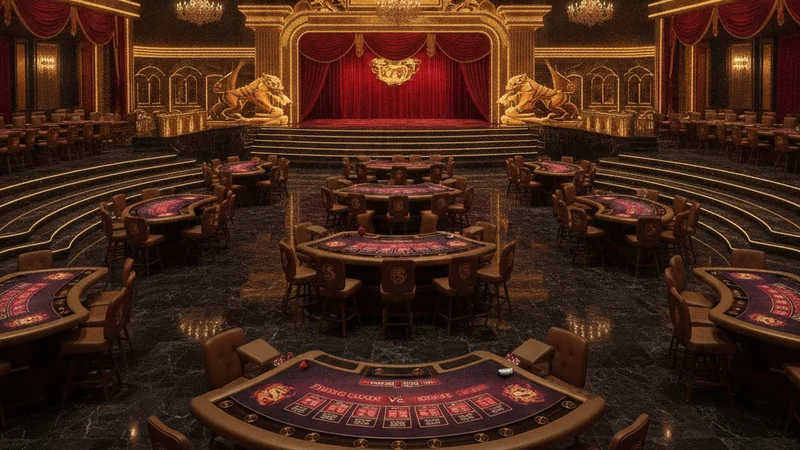
Dragon Tiger Arena presents multiple Dragon Tiger tables visible simultaneously on screen, each with a separate live dealing station. Players can place bets on any active table, switching between battles in real time. The arena format increases the excitement and gives players many more betting opportunities per session.
Strategy tip. with so many tables tempting you at once, the smartest play is to spread your stake thinly rather than chase every battle. Stick to the lower-edge Dragon and Tiger main bets and steer clear of the Tie, whose payout looks attractive but carries by far the steepest house edge, the arena format multiplies how quickly that edge can erode an undisciplined bankroll.
How the Arena Format Differs
Dragon Tiger Arena's distinguishing feature is not a rule change but an interface one: several Dragon Tiger tables are presented together, letting you follow and bet across more than one at a time rather than committing to a single dealer's rhythm. The underlying game is unchanged, one card to Dragon, one to Tiger, higher card wins, Ace low and King high.
That also means the underlying maths is unchanged. Dragon and Tiger carry a house edge of roughly 3.73%, and the Tie remains the expensive novelty it is on any Dragon Tiger table.
What to Know Before You Bet
- Multi-table play multiplies your exposure, not your edge. Betting three tables a round means paying the house edge three times per round. The format is a convenience feature; treat it as one and reduce your per-table stake accordingly.
- The Tie is still a 32% bet. Seeing several tables at once means seeing ties land more often in absolute terms, which makes the bet look more frequent than it is. It is not.
- Pace discipline matters more here. Dragon Tiger already settles in under 30 seconds. Running several tables compresses that further than most players intend.
For the full rules, side-bet menu and a proper strategy framework, see our Dragon Tiger strategy guide.
How the Arena Screen Organises the Chaos
The arena view solves a genuine interface problem, how to make several simultaneous card duels readable at once, and it is worth learning its grammar before staking. Each dealing station runs its own shoe, its own countdown and its own result history, with the layout keeping every table's betting window visible in parallel. The design assumption is glanceability, results readable in your peripheral vision while your attention sits on the table you are actually betting. New players do better inverting that, attention on one station only, with the others treated as scenery until the rhythm of the format settles in. The arena rewards expansion gradually, and it punishes players who treat all stations as equally theirs from the first minute.
Every Station Is Its Own Universe
The point cannot be made too plainly, because the layout visually implies a connection the mathematics does not contain. Each station's shoe is dealt independently, no station's streak leans on another's, and a Dragon run on the left screen is silent about the right. The arena's real gift is choice of tempo rather than information, since stations naturally sit at different points in their betting cycles, and a player who wants a bet available every few seconds can have one without ever hurrying a decision. That is the format used well, tempo on your terms. Used badly, it is the same house edge collected several times a minute across stations you are barely watching.
A Structure for Arena Sessions
The discipline that works is borrowed from multi-table baccarat and adapted for Dragon Tiger's speed. Pick two stations at most, halve the stake you would play at a single table, and bet the stations alternately rather than simultaneously so each decision gets its own moment. Keep the Tie and side bets out of arena play entirely, because their costs multiply across stations faster than their entertainment does. And set a hand count for the session, since the arena removes even the between-round pauses that a single fast table retains. The game underneath is covered in our Dragon Tiger strategy guide, and every word of it applies at every station.
Who the Arena Format Was Actually Built For
The arena presentation makes most sense once you picture its intended player, someone fluent enough in Dragon Tiger that a single table's rhythm leaves attention to spare. For that player the arena is genuinely well designed, spare attention soaked up by tempo choice rather than by riskier bets, which is the healthier of the two directions restless attention drifts. The format is also quietly good for a specific practical situation, the player on an unreliable connection, since a frozen stream at one station leaves others visible and the session's rhythm intact rather than broken.
Who it poorly serves is the newcomer, and the reason is instructive. Dragon Tiger's one real hazard is its speed amplifying small leaks, the Tie bet, stake creep, loss chasing, and the arena multiplies exactly that amplifier. The right order remains a single classic table until the game is boring, then the arena when boredom, not losses, is the problem being solved. Boredom is a legitimate problem for an experienced player, and solving it with tempo instead of stake size is the mark of someone playing well.
Common Questions
Is the arena better value than a single Dragon Tiger table?
The prices are identical per hand. The arena sells convenience and tempo, not improved odds, and its value depends entirely on whether more hands per hour is something your bankroll wants.
Can I bet different amounts at different stations?
Yes, each station takes its own stakes independently. The risk is bookkeeping rather than rules, since players reliably lose track of per-station exposure. A fixed, identical stake everywhere is the arrangement that survives an evening.
Do the stations share a shuffle or card supply?
No. Each station runs its own shoe with its own shuffle cycle, which is precisely why patterns never transfer between screens no matter how convincingly they seem to rhyme.
Do arena stations ever run different stakes or rules?
Stations can differ in minimums and side-bet menus, which is easy to miss in the parallel layout. A ten-second check of each station's limits before staking prevents the classic arena surprise, an identical-looking bet costing different money two screens apart.
A final note on the name. The arena framing suggests competition between stations, and it bears repeating that none exists. No station is hotter, no dealer luckier, and the tournament aesthetic is staging over what remains a set of independent, identically priced card duels. Enjoy the theatre of the format, and let the staging stay staging.