Face Up Pai Gow Poker Malaysia – Full Dealer Info Strategy Guide
Every one of the dealer's seven cards is turned face-up before you touch your own hand, and that single change rewrites the decision compared with standard Pai Gow Poker. This guide covers exactly how the deck and the hand rankings work, why the format takes the ties back, how the setting decision changes once you can see your target, and how long a modest bankroll realistically lasts at this table.
Face Up Pai Gow Poker flips the traditional Pai Gow Poker format by exposing the dealer's entire seven-card hand face-up before you arrange your own cards. Available at most Malaysian live casinos, this rare slice of full information transforms the decision-making: you set your high and low hands knowing precisely what you must beat, while the casino balances that advantage by turning ties into dealer wins and trimming the payouts. The result is a slower, more cerebral table game that rewards patient, methodical players.
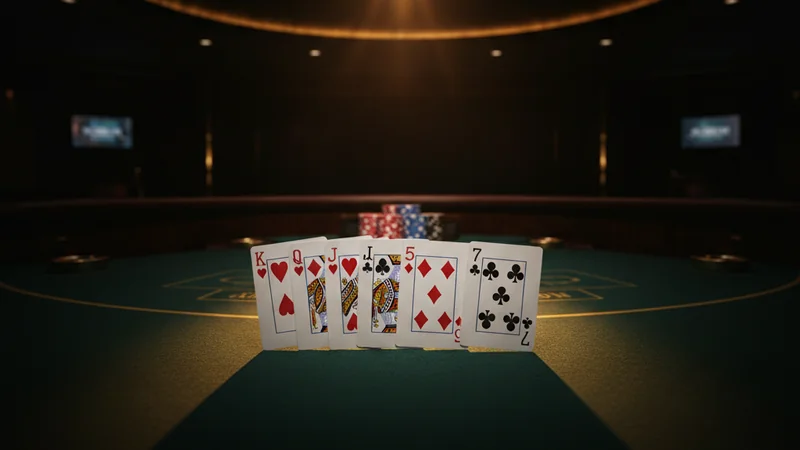
What is Face Up Pai Gow Poker?
Standard Pai Gow Poker has the dealer's cards face-down. Face Up Pai Gow Poker reveals all dealer cards before players split their hands into a five-card "high" hand and two-card "low" hand. This information advantage is balanced by ties always going to the dealer (rather than pushing as in standard Pai Gow).
The Deck and the Two Hands
Pai Gow Poker in all its forms is played with a 53-card deck, a standard 52 plus one joker. The joker is semi-wild: it counts as an ace, or it completes a straight, a flush or a straight flush, and nothing else. Each player and the dealer receive seven cards from that deck, which are then split into a five-card high hand and a two-card low hand.
One rule governs the split and it is absolute. The two-card hand must rank lower than the five-card hand. Setting a pair of kings in the low hand behind an ace-high five-card hand is a foul, and a fouled hand loses outright. Live interfaces will normally refuse the arrangement rather than let you submit it, but understanding why the restriction exists is what makes the rest of the strategy make sense: your job is not to build the best possible five cards, it is to build the best pair of hands that respects that ordering.
How to Play
- Ante bet. Place your wager before cards are dealt.
- Dealer hand revealed. All seven dealer cards are turned face-up.
- Receive seven cards. You receive your seven-card hand face-up.
- Set your hands. Split your cards into a five-card high hand and two-card low hand, aiming to beat the dealer's equivalent hands.
- Compare. Both high and low hands are compared. Win both to win the bet. Win one to push (except in Face Up where ties favour the dealer).
Strategy Advantage
Tip 1: Use Dealer Hand Information
With the dealer's hand visible, you can optimise your hand split based on what you need to beat specifically. If the dealer has a weak low hand (e.g. 2-3), you can afford to sacrifice your low hand strength to build an overwhelming high hand.
Tip 2: Banker Option
In Face Up Pai Gow Poker, players can optionally "bank", taking the dealer position against other players. Banking is advantageous as ties go to the banker, making the banker role statistically profitable over time.
Tip 3: Set a Safe Low Hand Before Chasing the High
Because a tie on either hand counts as a loss in the face-up format, the classic "house way" of keeping your two-card low hand respectably strong becomes even more important here. When you hold a marginal seven, prioritise placing your second-best pair or a solid high card in the low hand rather than stacking everything into the five-card high hand, copying the dealer outright is far costlier in this variant than in standard Pai Gow.
Which Providers Offer It
Pai Gow Poker is a niche title in Asian-facing lobbies, and the face-up variant is niche within that, so availability is worth checking before you register rather than assumed. These are the suppliers whose table game collections carry Pai Gow Poker for players in this market.
- Playtech, whose table game portfolio includes Pai Gow Poker alongside its live dealer suite.
- Microgaming Plus, a long-established supplier whose catalogue has carried Pai Gow variants for years.
Because the face-up format is not universal, search the operator's table game list for the exact title rather than relying on a Pai Gow category tile, and confirm the settlement rules in the panel once the table loads. Our directory of live casino providers covers which studios each type of site tends to carry.
Playing With the Answers in View
Full information changes the psychology of the table more than the strategy. With the dealer's seven cards exposed and their setting fixed by house way, every hand becomes a small solvable puzzle, arrange your high and low hands to beat what you can plainly see, and the game rewards the methodical player who actually works the puzzle over the one who sets hands by habit. The discipline is using the information rather than admiring it. Before touching your cards, read the dealer's made hands, note what your five-card hand must beat and what your two-card hand needs, and set against those targets specifically. Players who set their hands the same way they would blind are paying for information and then declining to spend it.
The House Gets Its Edge Back in the Fine Print
An information advantage that large has to be paid for somewhere, and the format collects through its settlement rules, ties resolving in the house's favour and the payout structure trimmed relative to the standard game. The arithmetic still works out to a playable price, but it relocates where your results come from, since outright wins matter more when pushes stop being neutral. That makes the hand-setting decisions genuinely consequential in a way standard Pai Gow's forgiving push-heavy rhythm often is not. The rules panel states the exact settlement terms for your table, and this is a variant where reading them is not optional homework but the actual price list.
Two things in particular vary between tables and change the price materially: whether a commission is charged on winning hands, and exactly which tie outcomes settle to the house. Both are printed in the table's rules panel and neither is safe to assume from the standard game. We check game guides against the provider's own published rules rather than against lobby marketing copy, a process set out in our live casino review methodology, and on this variant we would rather point you at the panel than quote a figure that may not match the table in front of you.
What a Modest Bankroll Buys Here
Pai Gow's defining statistic is its push rate. In the standard game roughly four hands in ten end level, which is why a bankroll survives so much longer here than at baccarat or roulette. The face-up variant trims that cushion by settling ties to the house, so expect fewer neutral hands and slightly more decisive ones.
In practical terms, a live Pai Gow table deals somewhere around 25 to 30 hands an hour once setting time is included, against 60 to 70 at a baccarat table. A player with MYR 300 betting MYR 10 a hand is looking at a long evening rather than a quick one, and that is the honest appeal of the game: table time per Ringgit, not a shot at a big number. Decide your stake and your finishing time before you sit down, and see our responsible gambling page for the deposit limits and session timers worth setting first.
The Slowest Burn on the Floor, Used Well
Pai Gow Poker was already the marathon format of the casino, its high push frequency stretching a bankroll across hours, and the face-up variant keeps that character even with its adjusted settlements. Rounds are deliberate, the setting decision rewards a pause, and an evening here consumes perhaps a third of the hands a baccarat table would deal in the same time. For players managing a modest bankroll toward maximum table time, that pacing is a genuine feature, arguably the format's best one. The wider Pai Gow family shares it, and the standard Pai Gow table makes the natural companion for comparing how the variant's transparency actually changes the sit.
Setting Hands Against Visible Targets, With Examples
The face-up advantage becomes concrete the first time it changes your split. Suppose your seven cards offer two pair, and the standard house-way habit would split them between your high and low hands. Now look across the table. If the dealer's exposed low hand is weak enough that one of your pairs beats it alone, keeping both pair in the five-card hand can convert a probable split result into a probable double win, a decision impossible to make blind and routine to make here. The reverse case appears just as often, the dealer's made flush telling you plainly that your five-card hand cannot win, so the correct set maximises the low hand and plays for the push-adjacent outcomes instead.
A session of decisions like these is what the variant actually sells, and it explains the format's audience skew toward players who enjoy the setting puzzle for its own sake. The information does not make you the favourite, the settlement rules saw to that, but it makes every round a genuine decision with a visible right answer, which is a rarer pleasure on a casino floor than the odds tables suggest.
Common Questions
What is the house way, and should I copy it?
It is the fixed algorithm the dealer uses to set their own hands, published in the rules. Copying it for your hands is a reasonable floor, but the whole point of face-up play is deviating when the visible dealer hands reward a different split.
Why do ties go to the dealer here?
That is the format's payment for showing you everything. Standard Pai Gow pushes ties, this variant settles them to the house, and the trade is the entire economic design of the game.
Is this a good first Pai Gow game?
It is arguably the best teacher, since watching the house way set seven exposed cards every round is a free lesson in hand construction. Learn here with small stakes, then decide whether the standard game's gentler settlements suit you better.
How often do rounds actually push?
Standard Pai Gow pushes roughly four hands in ten, the highest of any major table game, and this variant's settlement rules trim that in the house's favour. The exact behaviour is table-specific, and the panel states how your table treats each split outcome.
What does the joker actually do?
It is semi-wild rather than fully wild. It plays as an ace, or it completes a straight, a flush or a straight flush, and it cannot stand in for any other card. That single restriction is why five aces is a possible hand in Pai Gow Poker and why a joker in your seven is worth checking against both a straight draw and your ace count before you set.
Related Reading
- Playtech, one of the suppliers whose table game catalogue carries Pai Gow Poker.
- Pai Gow, the standard game and the natural comparison for how the face-up settlements change things.
- Caribbean Stud Poker, another table poker game with a single setting decision per hand.
- Casino Hold'em, if you prefer a poker table where you play against the dealer's community board.
- Live poker guide for Malaysian players, for how the casino poker family compares.
- Live casino bankroll management, which suits a slow, push-heavy game like this one particularly well.