Poker Pursuit Malaysia – Card-by-Card Progressive Poker Guide
A game that asks you to pay again after every card is a game that can quietly cost five times what you thought you were staking. That is the thing to understand about Poker Pursuit before anything else, and this page starts there. It covers how the staged reveal actually works, what a fully pursued hand costs in ringgit against your opening bet, how to count outs quickly enough to make each decision on evidence rather than hope, and how to size an ante so a run of full pursuits does not end the evening early.
Poker Pursuit is a table poker game found in the specialty section of some Malaysian live casino lobbies, built around a card-by-card reveal. Instead of dealing a whole hand at once, it shows one card at a time and lets you either add another bet to see the next or stop where you are. That single mechanic is the whole game.
What is Poker Pursuit?
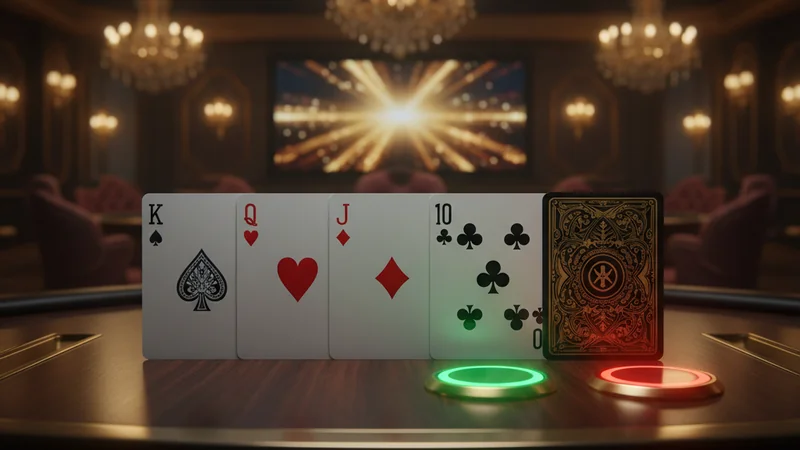
Poker Pursuit is a single-player table poker game that builds your five-card hand one card at a time rather than dealing it all at once. After every card flips over, you face a simple but loaded choice: "Pursue" by adding another equal-sized bet to draw the next card, or stop where you are. The strength of your finished hand sets the payout, and because that payout is scaled by how many Pursue bets you committed, a hand you backed all the way pays far more than one you bailed on early, the classic higher-risk, higher-reward trade-off that makes each reveal genuinely nerve-wracking.
How to Play Poker Pursuit
- Ante bet. Place your initial wager.
- First card revealed. Your first card is shown.
- Pursue or stop. Add another equal bet to see the next card, or stop with your current cards.
- Repeat for cards 2-4. Each card reveal presents a new Pursue decision.
- Fifth card. The final card is revealed. The finished hand is scored against the paytable, and what you are paid scales with how many bets you committed along the way.
What a Hand Actually Costs
The arithmetic that catches people out is simple once it is written down. An ante plus four Pursue decisions means a fully pursued hand costs five times your opening bet. Set the ante at MYR 10 and a hand you back all the way is a MYR 50 hand, not a MYR 10 one. Set it at MYR 50 and you are playing MYR 250 a hand at full commitment, which is a different game from the one the minimum-bet label advertises.
Size the ante against that maximum rather than the minimum. An ante of roughly one fiftieth of your session budget gives you ten fully pursued hands, which is a sensible floor, and in practice you will fold plenty of hands early and get considerably more play than that. On a MYR 500 session that means a MYR 10 ante. Anyone setting the ante against the opening bet alone will be surprised by how quickly the balance moves, and it is worth setting a session limit before the first card. Our responsible gambling page covers the deposit caps and reminders worth putting in place first.
Payouts are governed by the paytable in your table's info panel, and those paytables differ between studios in ways that matter, particularly on the middle rungs where most winning hands land. We take game figures from a provider's published rules and each table's own panel rather than from memory, which is the standard described in our live casino review methodology.
Strategy Tips
Tip 1: Pursue with Strong Partial Hands
If the early cards show real potential, three cards to a straight flush or a pair already made, pursuing is the right call and the escalating cost is justified by what the paytable pays at the top. The test is whether the number of cards that help you still justifies the price of the next one.
Tip 2: Stop Early with Dead Hands
If two or three cards show no connection and no strong potential, stopping early limits your total loss to fewer bets. The beauty of Poker Pursuit is this decision-making control, use it.
Tip 3: Treat Each Pursue Bet as a Fresh Decision
Because every Pursue stake is the same size as your ante, the bets you have already committed are sunk, they should not pressure you into chasing. Judge each new card purely on the live draw odds in front of you: how many cards left in the deck actually complete or improve your hand. Folding a once-promising hand the moment the maths turns against you protects far more of your bankroll than stubbornly pursuing a busted draw to the fifth card.
Which Providers Offer It
- Playtech, carries staged-reveal table poker in its wider card game catalogue for this market.
- Microgaming Plus, the other supplier whose catalogue includes progressive card games of this type.
Availability moves with lobby rotations, so check the specialty or table poker filter rather than assuming the game is stocked. If Poker Pursuit itself is not there, the same decision structure appears under other names in both catalogues.
Every Reveal Is a Fresh Buy-In Decision
The card-by-card structure turns one poker hand into a series of small investment decisions, and the right way to think about each Pursue is as a new purchase at a new price. After three cards you know a great deal, whether a pair has landed, whether a flush or straight is still breathing, and the continue decision should be made on that visible evidence rather than on the money already committed. Sunk stakes are the format's psychological trap. The cards already bought do not improve because you keep paying, and the hands that drain bankrolls here are almost always dead draws pursued to the end out of loyalty to earlier bets.
Counting Outs Without a Calculator
The format rewards a single portable skill, rough out-counting. With two cards to come, a four-card flush has nine helpful cards among the unseen and connects often enough to justify most Pursue prices. With one card to come the same draw is half as likely, and the arithmetic hardens accordingly. Pairs already made are the comfortable case, since they cash on the paytable's bottom rungs without improvement. The habit worth building is a two-second count at each reveal, helpful cards against the roughly fifty unseen, and a fold whenever the count embarrasses the price. That one habit is most of the distance between casual and competent play here.
Where the Format Comes From
Poker Pursuit descends from the stud-with-stations family that includes Let It Ride and Mississippi Stud, games built in the 1990s and 2000s around the same insight, that revealing a hand in stages and letting the player scale their commitment creates drama no single-deal format can match. The live studio treatment suits the lineage well, each reveal given its broadcast beat, and the format remains one of the better bridges between casual card play and genuine odds thinking. Its neighbours at Malaysian live casinos repay a visit too, Three Card Poker for the fast single decision and Casino Hold'em for community-card texture.
Session Notes
Because a fully pursued hand costs five times the opening stake, size the base bet against that maximum rather than the minimum, as set out above. Track your folds as wins of a kind, since money not spent on a dead draw is the only edge decision this game hands you. A session in which you folded eight hands on the second card and never saw a big payout is not a wasted session, it is the format working properly.
The Emotional Design of a Staged Reveal
It is worth naming what the format does to your head, because the design is deliberate. Each reveal is engineered as a cliffhanger, and a hand that dies on the fifth card after four paid pursuits feels dramatically worse than losing the same money in one deal, even though the ledger is identical. That manufactured investment is the game's entertainment engine and its risk. The players who handle it best decide their pursue-or-fold thresholds before the hand starts, pair by the third card or fold, draw alive by the fourth or fold, and let the drama play out against rules the drama cannot renegotiate. Watching a great hand build inside a structure you set in advance is the format at its best, tense and contained at once.
Count sessions in completed hands rather than in bets placed, since the variable hand cost makes bet counting misleading. Ten fully pursued hands is the floor a sensible ante gives you, and pricing an evening at ten maximum-cost hands tells you honestly whether tonight's budget fits the table you are looking at.
Common Questions
Is Poker Pursuit against a dealer hand?
No. The hand plays against a paytable, with payouts starting at a qualifying pair and climbing the standard poker ladder. There is no opponent to beat, only a hand to build at a justified price.
Can I fold and keep anything?
Folding surrenders the stakes already placed, which is precisely why each Pursue deserves a fresh decision. The good fold saves the next bet, never the previous ones.
Does the paytable vary between tables?
Yes, particularly on the middle rungs where your real results live. The panel check matters here as much as at any paytable game on the floor.
Does the game suit mobile play?
Well, actually. The one-decision-at-a-time structure fits a phone naturally, each reveal a single tap, and the staged pacing means a hand survives interruptions that would rush a countdown game. Just keep the fold discipline stricter on the small screen, where the pursue button sits temptingly under the thumb.
Related Reading
- Playtech, one of the studios whose table poker catalogue reaches this market.
- Three Card Poker, the opposite design, one decision and it is over.
- Casino Hold'em, community cards and a dealer hand to beat rather than a paytable.
- Caribbean Stud Poker, the classic paytable stud game in the same section of the lobby.
- Side Bet City, another paytable-only poker format worth comparing on price.
- Live poker in Malaysia, for how these table poker games differ from the real thing.
Who Should Play It
Poker Pursuit suits players who enjoy making decisions and can live with folding. The staged reveal gives you more agency than almost anything else in a live lobby, and every one of those decisions is a chance to save money rather than spend it. If that appeals, the game is genuinely absorbing and the pacing is kind on a phone.
It suits nobody who struggles to walk away from a hand they have already paid into. The design manufactures exactly that feeling on purpose, and a player who cannot fold a dead draw on the third card will pay five times the ante on hands that were finished two cards ago. Decide your thresholds before the first card, price the session at ten full hands, and the format gives back everything it promises.