Virtual Sports Malaysia – 24/7 Simulated Sports Betting Guide
Virtual Sports at most Malaysian live casinos brings non-stop, computer-simulated sporting action to your screen at any hour of the day. Instead of waiting for a weekend fixture list, Malaysian punters can bet on simulated football, horse racing, dog racing, and motorsport with a fresh event settling every few minutes. Because there is no off-season and no postponed matches, Virtual Sports suits anyone who loves the thrill of a wager but wants a result in minutes rather than waiting 90 minutes for a real-world final whistle. How the results are actually generated, why form study cannot help you here, and how to build a fixed race card that keeps a Ringgit budget intact across an evening are worth knowing before the first card, not after the budget is gone.
What is Virtual Sports?
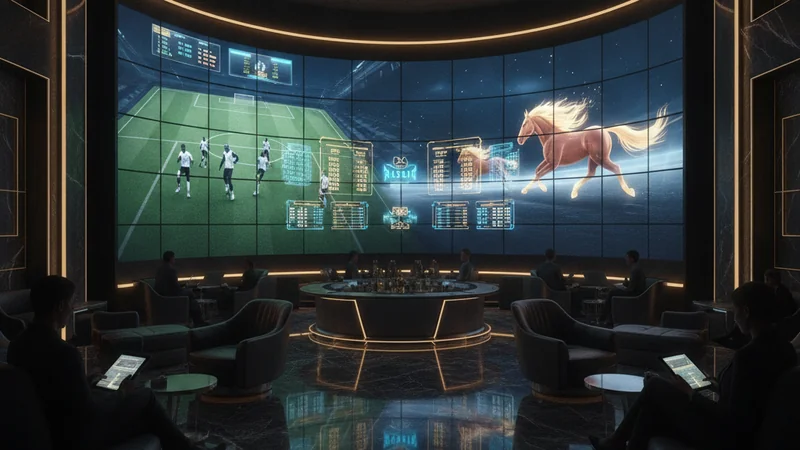
Virtual Sports uses advanced 3D simulation technology to generate realistic sporting events at regular intervals. The outcomes are determined by certified RNG (Random Number Generator) systems, ensuring fair and unpredictable results. Available sports typically include virtual football leagues, horse and dog racing, cycling, and motorsport.
Where These Details Come From
The event structure, market types and settlement behaviour described here come from the providers' published game rules and the in-game information panels, checked against live Malaysian lobbies under our review methodology. Margins on virtual markets are set per operator and per market rather than published as a single figure, so we describe how the overround behaves instead of quoting a percentage we cannot verify for the table in front of you.
Available Virtual Sports in Malaysia
- Virtual Football. Simulated league matches with teams, formations, and match statistics. Bet on match result, score, and goalscorer markets.
- Virtual Horse Racing. Classic thoroughbred horse racing with trainer, jockey, and form data. Win, place, each-way, and combination bets available.
- Virtual Dog Racing. Greyhound-style racing with trap positions and trap numbers. Straightforward win and place betting.
- Virtual Motorsport. Formula racing and other motor events with podium finish and championship betting.
- Virtual Cycling. Stage racing with rider and team betting markets.
Strategy Tips
Tip 1: Study the Virtual Form Data
Virtual Sports platforms display form data, statistics and odds for each event, and it is worth reading them for one reason only. The prices tell you what the model thinks, and short-priced runners win more often than long ones exactly as the odds imply. What the data cannot do is give you an edge, because the same model sets both the outcome and the price. Treat the form panel as a guide to volatility rather than a source of information the bookmaker has missed.
Tip 2: Match Real Sports Betting Approaches
Apply the same bankroll discipline you would use for real sports betting: a fixed stake per event, avoiding accumulators on long odds, and not chasing losses across multiple quick events.
Tip 3: Pace Yourself Between Events
Because a new virtual fixture can settle every two to three minutes, it is easy to fire off far more bets per hour than you would on real sport. Skip the occasional round and review your running total before re-staking, treating the gaps between events as deliberate cooling-off points keeps your session length and spend under control.
Which Providers Offer It
Virtual sports is a separate product line from live dealer tables, so the studios that supply it are not always the ones you recognise from the baccarat lobby.
- Playtech. One of the largest virtual sports suppliers worldwide, with the most developed football and racing simulations of the three listed here.
- Via Casino. Carries virtual sports alongside its social live casino format, aimed at players who move between the two.
- MT Live. Runs virtual sports and simulated race events within its wider live entertainment platform.
Which of these a Malaysian site actually carries varies, and virtual sports is often listed under its own tab rather than inside the live casino lobby. If you cannot find it, look for a Virtuals or Instant Games section before assuming it is absent.
Explore the full games library including Football Studio for real-time sports-themed live casino play.
How a Simulated Fixture Actually Works
Every virtual event is a small self-contained lottery dressed as sport. Before the race or match renders, a certified RNG draws the outcome from a weighted model, the odds you see are prices on that model's probabilities, and the three-minute broadcast is animation of a result that already exists. Understanding that order of operations matters, because it explains what virtual sports is and is not. It is fixed-odds betting with the waiting removed and the theatre kept. It is not a market where form study, team news or any knowledge of real football improves your chances, because there is nothing to know that the model has not already priced.
Markets, and How Their Prices Behave
The betting menu mirrors a real sportsbook in miniature. Match result, over and under goals, correct score and both-teams-to-score anchor the football product, while the racing formats offer win, place and forecast bets with a field of animated runners at staggered prices. The overround, the bookmaker's margin baked into the odds, is applied evenly and tends to run a little wider than sharp real-sport markets, which is the price of instant results around the clock. Spreading stakes across short-priced favourites feels safer and settles into the margin just the same, so the honest approach treats every market as the same product at slightly different volatility.
Using the Format Well from Malaysia
Virtual sports fills a particular niche in a Malaysian evening, the half hour where you want the rhythm of betting on events without committing to a live table's attention demands. The cadence is its own risk, a new event every few minutes with no natural stopping point, so the fixed-event-count plan matters here the way the fixed-draw plan matters at Live Lottery. Decide the number of events, divide the budget, and let the animation do its work. Players who find they mostly enjoy the racing presentation tend to drift towards the off-peak hours, when real fixtures are asleep and the virtual leagues are the only football running anywhere on earth. That is precisely when a fixed event count earns its keep, because nothing external is going to end the session for you.
The Racing Products Deserve Their Own Look
Virtual football gets the attention, but the racing formats are where the product's structure shows most clearly. A race offers win and place bets at the straightforward end, priced off each runner's model probability, and forecast bets, naming first and second in order, at the spectacular end. Forecasts behave exactly like the long-shot bets in every other format in this guide, losing almost always and paying handsomely when the exact sequence lands. The field sizes are small enough that the maths stays visible, which makes virtual racing a strangely good classroom for understanding how bookmaker margins work before ever touching a real sportsbook.
The events themselves resolve in under two minutes, quicker than the football's match presentation, which makes racing the denser product per hour and correspondingly the one where an event-count plan matters most. A tidy structure for a racing session is a fixed card of ten races, win or place bets carrying most of the budget, one forecast per race at a token stake for the sweat, and a full stop when the card completes. Ten races, a known spend, and every result animated within the half hour. As contained gambling formats go, a self-imposed race card is about as clean as the habit gets.
A Race Card Priced in Ringgit
Build the session as a card and the arithmetic does the discipline for you. Ten virtual races at under two minutes each is a little over twenty minutes of betting, and it gives you a spend you can calculate before the first trap opens rather than discover afterwards.
Take a MYR 100 budget for that card. MYR 8 on a win or place bet in each of the ten races is MYR 80, and MYR 2 on one forecast per race is another MYR 20, which spends the budget exactly and leaves nothing to be topped up mid-card. Compare that with the alternative most players actually run, which is MYR 10 a race with no plan, no forecast allowance and a top-up after the fourth loser. The second version has no defined end and routinely turns a MYR 100 evening into a MYR 300 one.
The cadence is the thing to respect. A new event every two to three minutes means a virtual session can put through 25 to 30 bets an hour without feeling hurried, which is more betting decisions than a full afternoon of real football offers. Whatever margin the operator applies to these markets, and it tends to run wider than sharp real-sport prices because instant settlement is what you are paying for, it is charged on every one of those bets rather than on the handful you would place across a real fixture list.
The mistake to name is treating a losing card as unfinished. The card is ten races because you said it was ten races, and the eleventh exists only because the screen offers it. If the count keeps extending, the deposit limits, session reminders and Malaysian support services on our responsible gambling page are built for that pattern specifically.
Playtech is the studio behind the most widely carried virtual football and racing products. Football Studio is the live-dealer answer to the same itch, with a real dealer and a real card deck, and Live Lottery shares the fixed-draw structure and rewards the same event-count discipline. Bankroll management for live casino play is the companion to the race card arithmetic above, and is a live casino rigged? covers how RNG certification and result logging actually work.
Common Questions
Do real-world results influence virtual events?
No connection exists. Team names and liveries are generic, the model knows nothing of real leagues, and every event is an independent RNG draw.
Can the events be rewatched or verified?
Result histories with event identifiers are kept in the game window, and each event settles from its logged RNG outcome. That log is what a support team checks if you ever query a settlement, so quote the event identifier rather than describing the race.
Is there any skill element at all?
Stake sizing and stopping discipline, the same two skills as every fixed-odds product. Within the events themselves, the model has already priced everything a skilful eye might notice.
How is this different from betting on real sports?
Everything a sports bettor uses is absent by design. There is no form to study, no injury news, no value to hunt where a bookmaker has mispriced a real team, because the odds and the outcome flow from the same model. What remains is the presentation and cadence of sports betting at slot-machine independence, every event a fresh draw. Real sports betting rewards knowledge unevenly. Virtual sports charges everyone the same margin and owes nobody an edge, which is either its flaw or its honesty depending on what you came for.